
If you are a marketing leader in 2026, you already know that the search landscape has fundamentally shifted. The novelty of prompting a chatbot to write a generic blog post is over. Today, the conversation has moved entirely from discovery to selection and workflow integration.
You aren’t looking for another basic AI writer. You are evaluating how to connect top-tier AI tools into an “Agentic Marketing” stack—a seamless workflow that solves the paradox of producing high-quality content at scale without losing your brand’s unique voice.
You need to know whether to stick with traditional SEO optimization platforms, migrate to all-in-one AI suites, or piece together specialized agents using Model Context Protocols (MCP). More importantly, you need to know how to future-proof your content for Generative Engine Optimization (GEO) so your brand shows up as the definitive answer in ChatGPT and Perplexity.
This is where the evaluation phase gets complicated. But it doesn’t have to be.
The Shift to Agentic Marketing Workflows
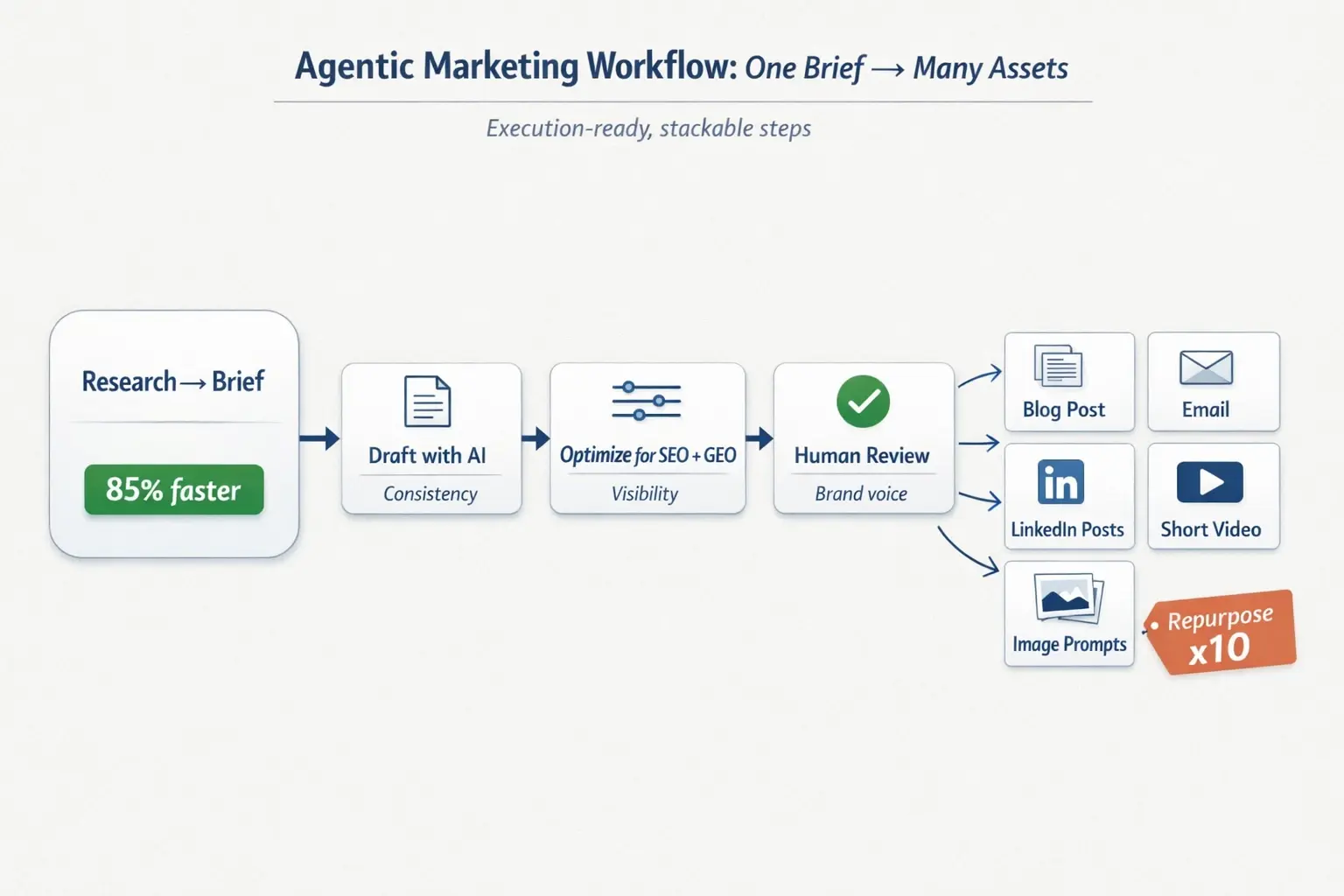
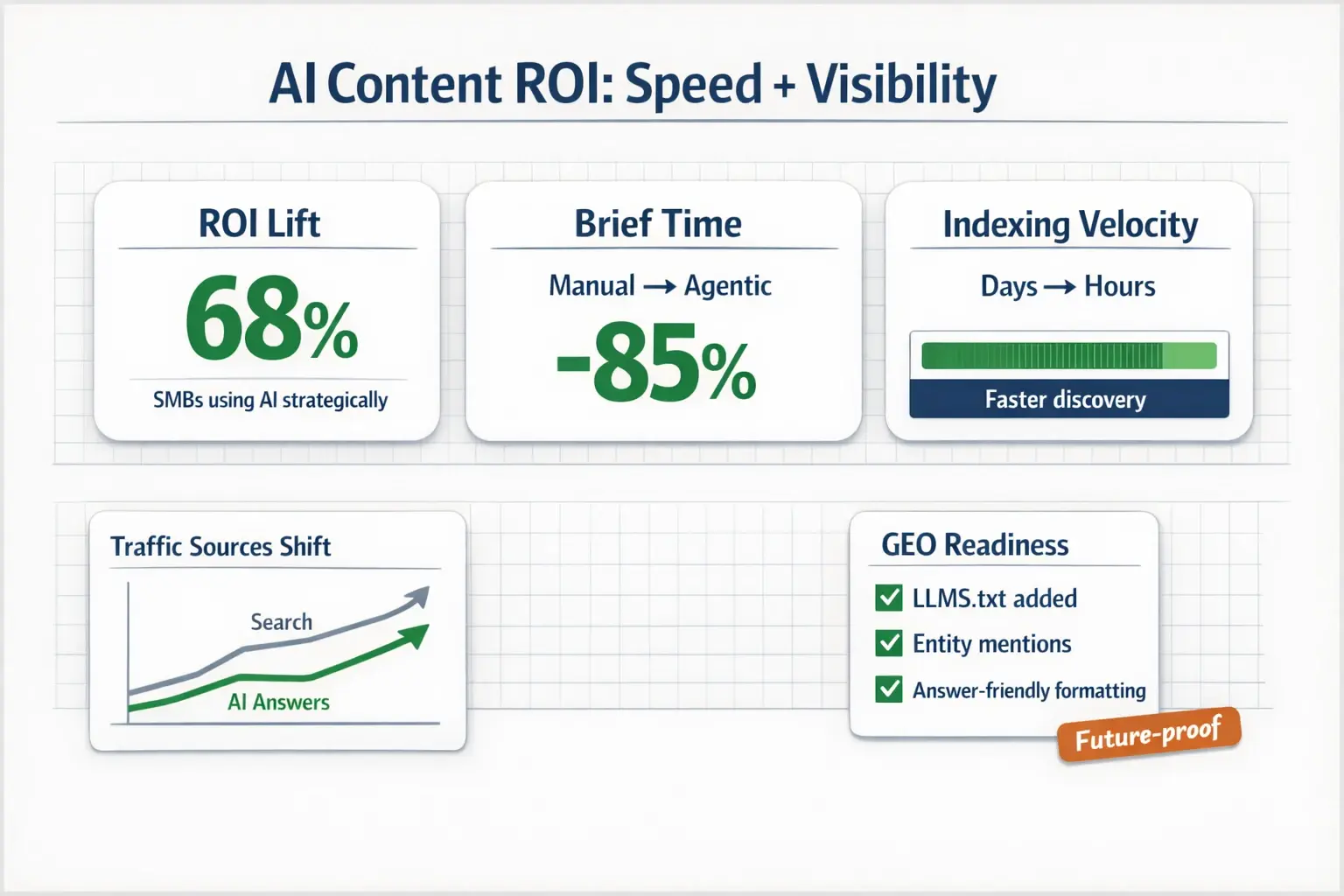
We are witnessing a mass migration away from isolated point solutions toward interconnected “AI Agents.” According to recent 2026 data from Marketer Milk, integrating top-tier AI agents like Gumloop or Claude can reduce your research-to-brief time by an astonishing 85% compared to manual keyword research.
But how do you choose the right stack? When we evaluate the current market landscape, we see a distinct divide in how tools operate:
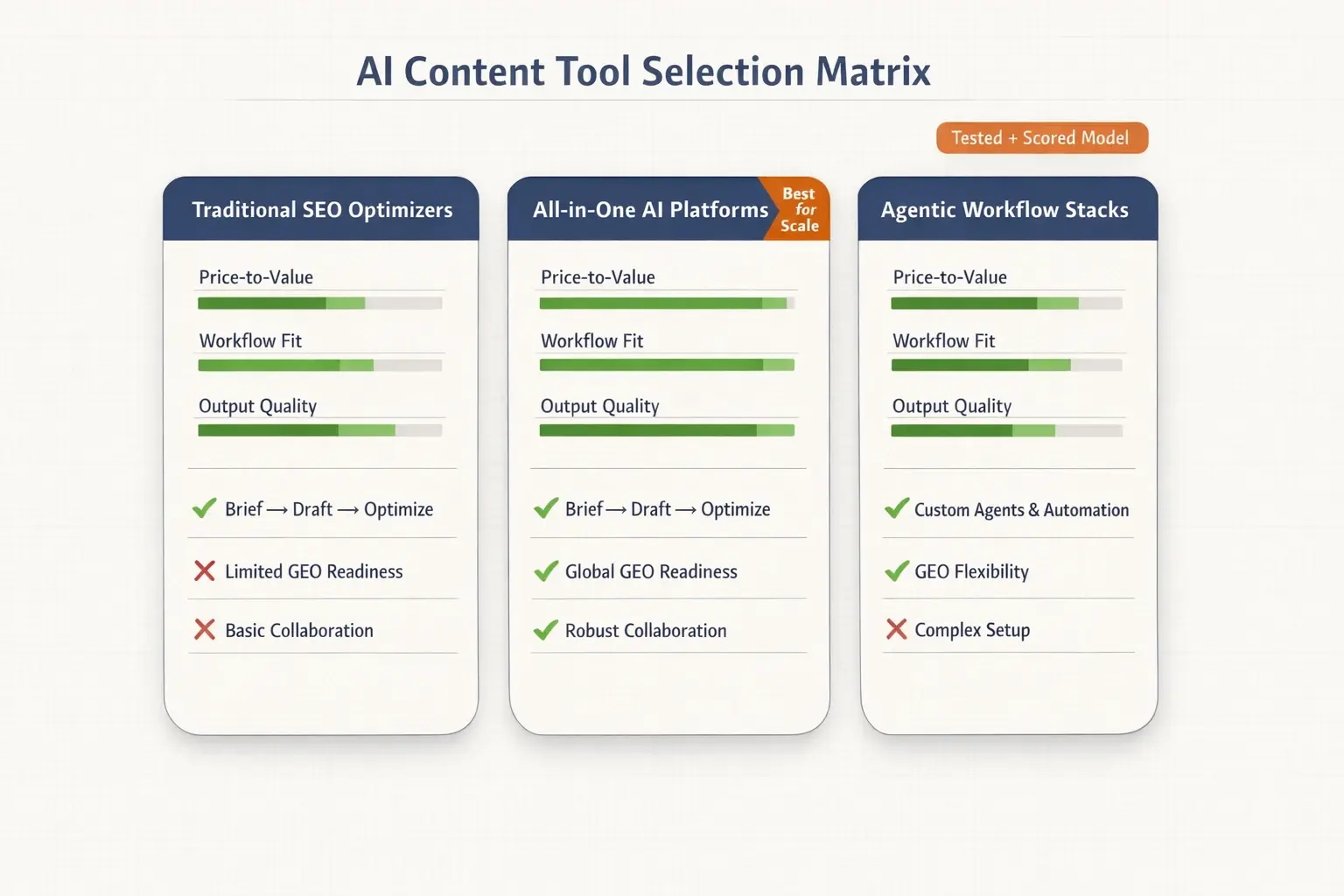
Traditional SEO Tools vs. All-in-One AI Platforms
If your primary goal is dominating the traditional Google 10-blue-links, you’ve likely evaluated tools like Surfer or Clearscope. These platforms excel at computational linguistics and on-page optimization. Competitors like Rankability offer incredible NLP depth (focusing heavily on IBM Watson and Google NLU), but their high entry price often alienates small-to-medium businesses (SMBs) trying to scale lean teams.
On the other side of the spectrum are all-in-one platforms like Writesonic, Scalenut, or Frase.io. These tools offer a highly appealing workflow—taking you seamlessly from content brief to drafting to optimization. However, they are sometimes perceived as entry-level when scrutinized by advanced technical SEOs.
To bridge this gap, modern marketers are adopting stackable workflows. Instead of relying on a single tool to do everything adequately, they are using integration platforms (like Zapier or direct MCP connections) to pipe the output of an advanced AI writer into a dedicated NLP optimizer.
The Swipe Directory Blueprint: Omnichannel Repurposing
We treat Swipe Directory not just as a repository, but as a “Workflow Laboratory.” One of the most powerful growth hacking techniques we’ve tested this year involves omnichannel repurposing workflows.
Here is what an execution-ready workflow looks like in 2026:
- Agentic Research: Use Perplexity or an automated Claude workflow to aggregate competitor gaps.
- Drafting & NLP: Feed those insights into an AI writer structured by a Frase or Surfer brief.
- Omnichannel Scale: Run the final optimized article through an AI repurposing tool to automatically generate 10 LinkedIn posts, an X thread, and a script for an AI video generator (like Synthesia or HeyGen).
This workflow allows you to stretch one piece of core content across multiple touchpoints—an absolute necessity if you are driving growth hacking ecommerce initiatives where high-volume content demands are relentless.
Overcoming AI Detection: The Human-in-the-Loop Benchmark
The secondary intent we see constantly from evaluating marketers is fear—specifically, the fear of AI detection penalties and robotic brand voice. You want the efficiency of AI, but you refuse to sacrifice trust.
This is where the “Human-in-the-Loop” (HITL) methodology becomes a non-negotiable part of your tech stack. Top teams are no longer trying to bypass AI detectors by using clunky “humanizer” tools that intentionally inject bad grammar. Instead, they are implementing structured QA layers.
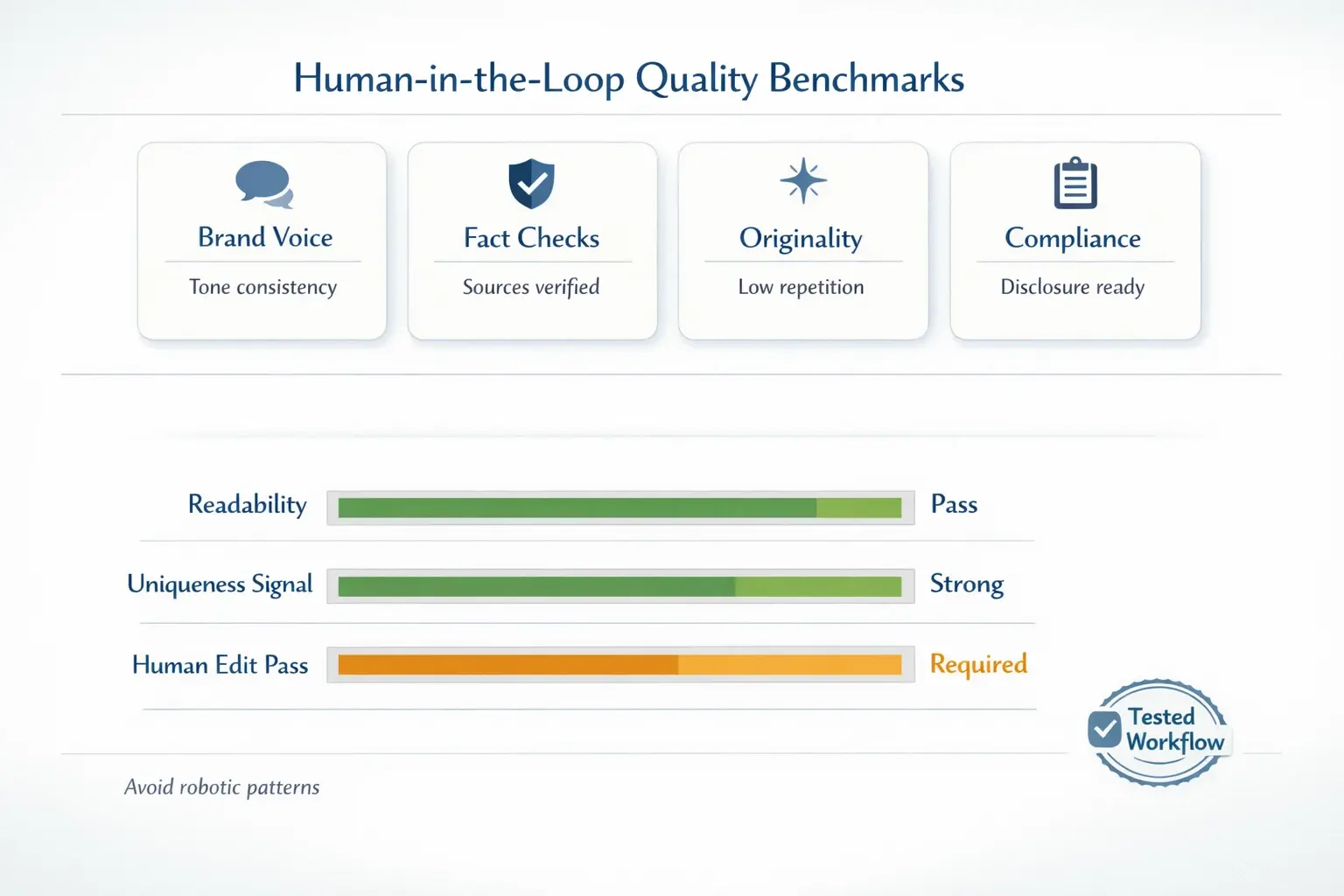
By utilizing advanced prompt engineering (giving your AI your specific brand guidelines, tone-of-voice documents, and historical top-performing posts), you drastically reduce the editing burden. Human editors then step in to inject subject matter expertise, personal anecdotes, and empirical data—the exact elements that Google’s Helpful Content algorithms reward.
Generative Engine Optimization (GEO): The Hidden MOFU Intent
While you are evaluating tools to rank on traditional search engines, the hidden intent driving modern marketing is future-proofing for Answer Engine Optimization (AEO). According to 2026 research from AthenaHQ, 68% of small businesses report significantly higher ROI when using AI tools strategically to capture visibility inside Large Language Models (LLMs).
Brand mentions in LLM training sets are rapidly becoming as valuable as traditional backlinks for high-intent B2B searches. If you are consulting for healthcare growth hacking agencies or building SaaS brands, getting cited by AI agents is critical.
The llms.txt Strategy
A massive capability gap we exploit in our workflow laboratory is the implementation of llms.txt files. Just as robots.txt directs traditional crawlers, providing an LLM-readable text file on your root domain helps AI bots correctly interpret, cite, and recommend your proprietary data. Few standalone tools handle this out of the box, meaning your integration stack needs a process for formatting and updating these files.
The ROI of Speed: AI-Powered Indexing Velocity
We cannot discuss AI optimization without addressing Programmatic SEO and indexing velocity. Creating 50 high-quality, localized landing pages with AI is only half the battle; getting Google to crawl and index them quickly is the other.
Modern marketing workflows leverage AI-assisted indexing APIs to push URLs directly to search engines. By combining high-velocity content generation with proactive indexing tools, new domains are slashing their time-to-rank. This “ROI of Speed” is what separates traditional content marketers from modern AI-augmented growth teams.
Frequently Asked Questions
Does using AI content generation negatively impact traditional SEO in 2026?No, provided the content prioritizes user intent and demonstrates firsthand expertise. Search engines penalize low-quality, derivative content, not the tool used to generate it. Incorporating a Human-in-the-Loop review ensures you pass quality thresholds.
Should I buy an all-in-one AI platform or build a custom stack?If you have a limited budget and need to move fast, an all-in-one platform (like Frase or Scalenut) is highly effective. If you are operating at an enterprise scale or need hyper-specific brand voice control, building an Agentic stack (combining tools like Claude, Surfer, and Gumloop) yields a much higher ROI.
What is Generative Engine Optimization (GEO)?GEO is the practice of optimizing your brand’s content to be cited as the authoritative answer within AI-driven search engines (like ChatGPT, Claude, and Perplexity) rather than just ranking on traditional search engine results pages.
How do I ensure AI tools don’t hallucinate facts in my marketing content?Always anchor your AI generation prompts to proprietary data. Instead of asking an AI to “write an article about X,” provide it with an outline, transcripts from internal SME interviews, and empirical data, restricting it to only write based on the provided context.
Next Steps for Your Content Strategy
Selecting the right AI tools isn’t about finding a magic bullet; it’s about building a sustainable, scalable workflow that empowers your marketing team. As the landscape continues to evolve toward Agentic Marketing and Generative Engine Optimization, staying ahead requires continuous testing and adaptation.
Ready to find the exact tools to build your ideal stack? Head over to our swipe resource page to explore our meticulously curated, unbiased reviews of the best AI marketing platforms on the market today. Stop searching, and start building your workflow laboratory.